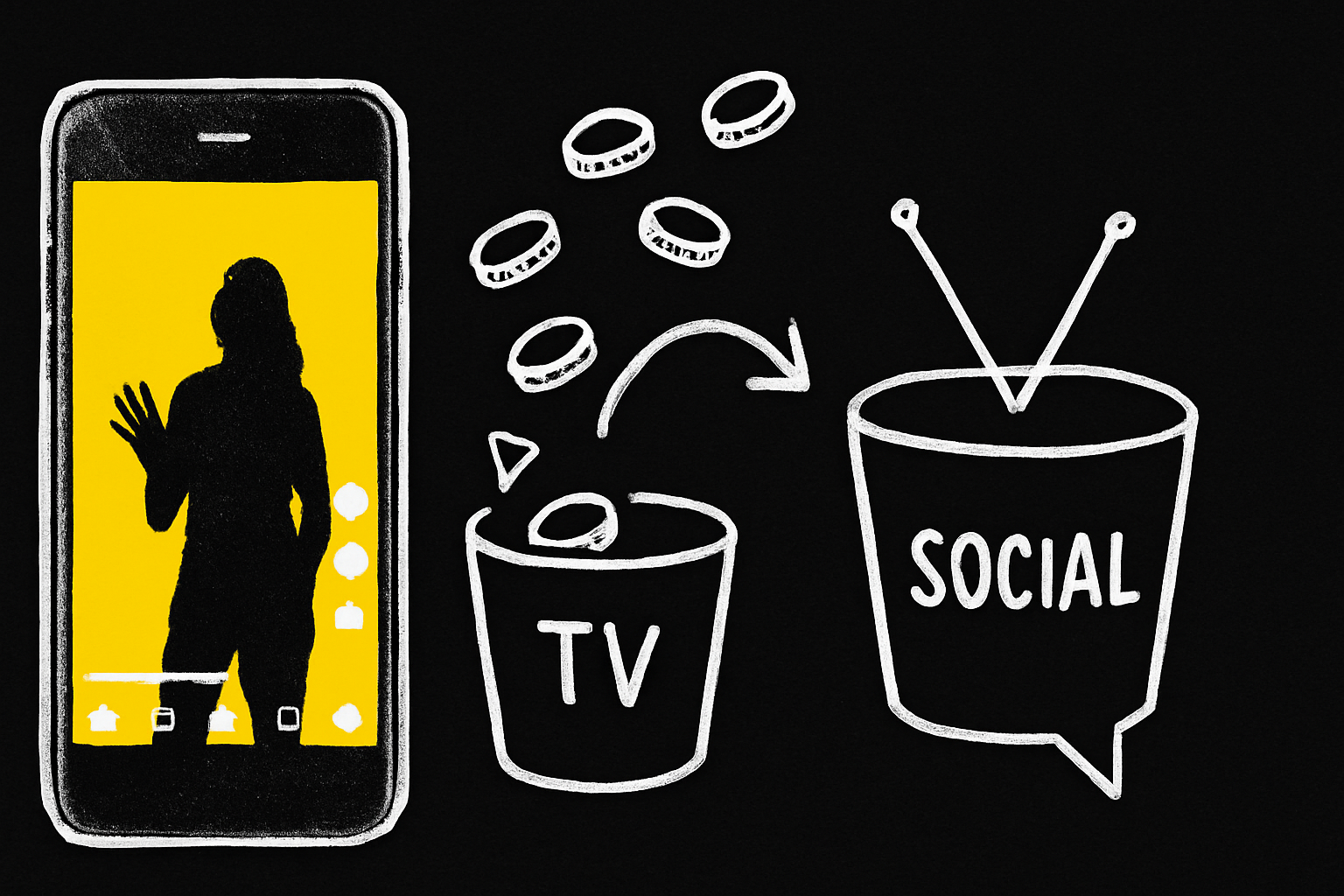
YouTube Shorts is pulling in more ad revenue, but according to Digiday’s Future of TV Briefing, the money is coming mostly from budgets that were already earmarked for YouTube, not from the social budgets that fund TikTok and Instagram Reels. YouTube is also raising the bar creators need to hit before they share in ad revenue at all. Both facts point at the same problem: short-form video on YouTube is still being funded and measured by different rules than the rest of the platform, and that inconsistency should worry anyone using YouTube as a serious channel for thought leadership content.
The budget line matters more than the view count
Advertisers still file YouTube Shorts spend under “video” budgets, not “social” budgets. That sounds like an internal accounting quirk, but it has a real effect on how much money flows to the format. Social budgets are larger and faster-moving; video budgets are slower and tied to different KPIs, often completion rate and brand recall rather than engagement and shares. If Shorts stays parked in the video bucket, it competes for a smaller pool of money against a format, long-form YouTube, that already has an entrenched case for that spend.
For B2B teams cutting long podcast episodes into short clips for YouTube, this is a signal to stop treating those clips as a free byproduct of the main recording. If YouTube itself can’t get advertisers to fund Shorts the way they fund TikTok, you should not expect the platform’s algorithm to reward short clips with the same organic reach either. Budget your effort accordingly: a Shorts clip built purely to harvest views on autopilot will underperform a clip built with the same intent as a paid social ad, meaning a clear hook in the first two seconds and a reason to click through to the full episode.
Higher payout thresholds change who’s still posting
Raising the revenue-sharing bar for Shorts creators will thin out the volume of casual, low-effort short-form content on the platform, because marginal creators who were posting for small payouts will have less reason to keep going. That’s relevant if you’ve been relying on YouTube’s Shorts feed as a low-cost distribution surface for podcast clips. Less noise from casual creators can mean better relative visibility for content that is genuinely built with a strategy behind it, but it also means the audience watching Shorts is likely to be smaller and more selective, not larger. Don’t assume Shorts is compounding for your programme just because it compounded for you last year.
There’s a parallel worth noting from the same week’s podcast news: YouTube also changed how it calculates “views,” and podcaster Zachary Boone flagged that publishers should keep reporting “Engaged Views,” the older, stricter metric, because the new count opens the door to inflated numbers. The lesson is the same one that applies to Shorts revenue: when a platform changes how it counts or pays, treat the change as noise until you can verify it against a metric you trust, not as a reason to shift strategy overnight.
What this means for your distribution plan
If your podcast programme treats YouTube Shorts as a nice-to-have afterthought, this is the moment to decide whether it deserves a real budget line of its own, separate from “we’ll clip the episode and see what happens.” At B2B Better, a podcast agency, we plan clip strategy for clients as its own workstream with its own hook-writing and posting cadence, precisely because platforms like YouTube are still working out how to fund and rank short-form content, and that uncertainty punishes anyone treating it as an afterthought. The advertisers pulling in the money have already made that call. Your content team should make the same one.
The concrete step: audit the last ten Shorts clips you posted from podcast episodes and check whether each one had a standalone hook, not just a slice of the full conversation. If most of them were just cut-down segments with no separate opening, that’s the gap to close before you invest more time in the format.