The best host for a B2B podcast is the person your buyers would already take a meeting with: a subject matter expert with real opinions, a schedule that can absorb two recordings a month for a year, and the willingness to disagree with a guest on tape. Seniority is a weak signal. Curiosity, availability and credibility with your specific buyer are the three that matter.
Choosing who should host a B2B podcast is the decision most likely to kill the show, because it is the only one you cannot quietly fix later. You can rename the show, redo the artwork, change the intro music and move from fortnightly to monthly, and nobody outside the marketing team will notice. Change the voice in the ear and you restart the relationship.
What actually makes someone a good B2B podcast host?
Start with the fact that people listen to B2B shows for the content, not to bond with the presenter. That is a real difference from consumer podcasting, where the host relationship is the product. In B2B, the host’s job is to get better answers out of a guest than the guest gives anywhere else. Charisma helps at the margins. Domain knowledge is what produces the follow-up question that makes a listener sit up.
That points to four things worth testing before you hand anyone the mic.
- Subject matter depth: they can push back, disagree, and elaborate, because they understand the topic well enough to know when a guest has given a stock answer.
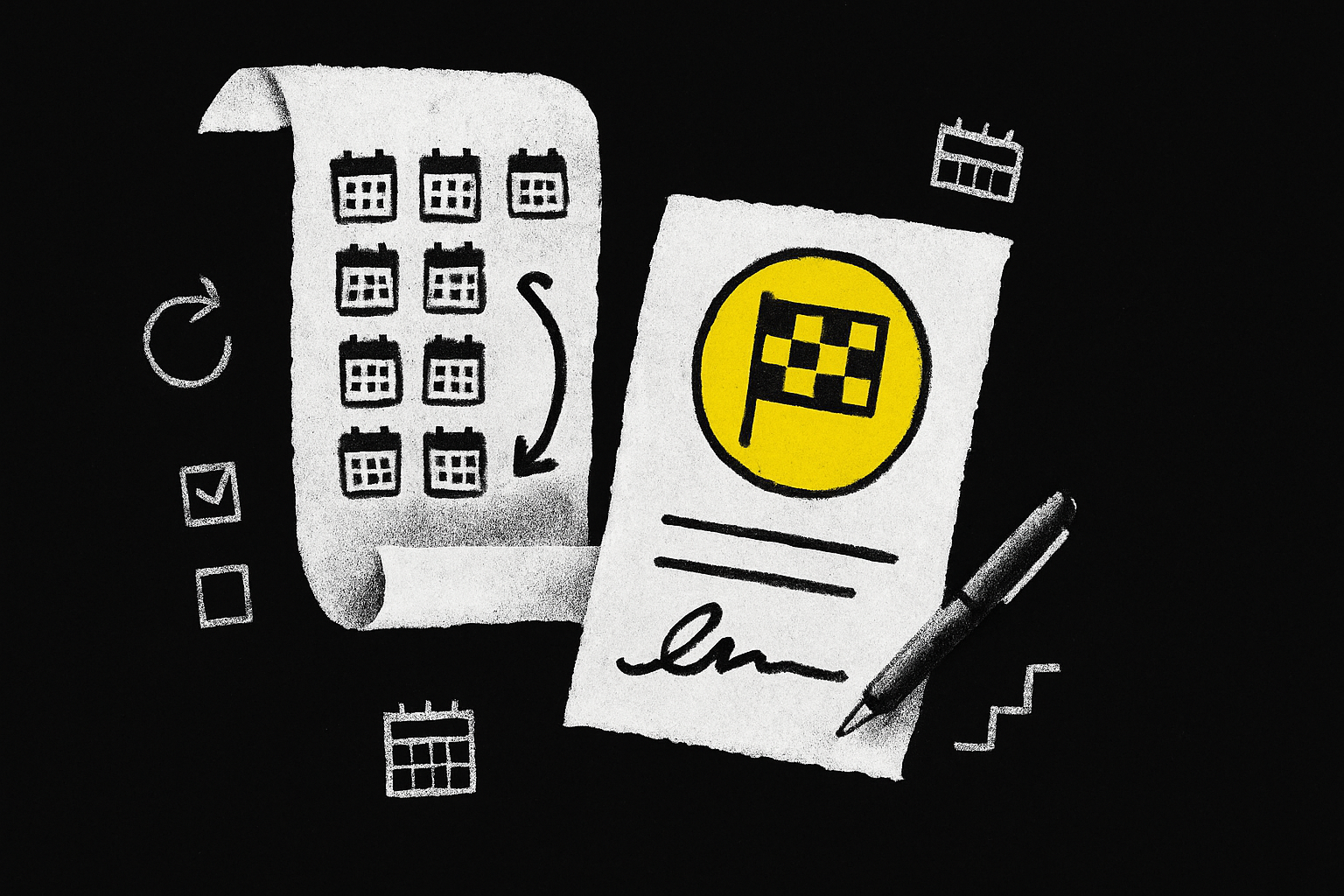
- Calendar reality: recordings land in their diary every fortnight and survive a quarter-end, a fundraise, a product launch and a holiday.
- Conversational control: they interrupt politely, redirect, and do not let the guest quietly become the host.
- A point of view your buyer would argue with: someone people inside the company already go to for a straight answer usually has one.
The last one is the filter people skip. A host who has no opinions produces an interview that could have been conducted by anyone, and a show that could have been made by any of your competitors. If your host’s contribution is reading questions in order, you have made a recorded webinar.
There is a practical test that costs nothing. Record a 30-minute conversation with a friendly guest, someone from your existing network who will forgive a rough first attempt, and listen to it a week later. Friendly interviews exist for exactly this reason: they generate early content and prove the concept before you spend outreach credibility on a guest you actually want. If the candidate host was still asking sharp questions at minute 25, you have a host. If they ran out of material at minute nine and started narrating their own company, you have a problem you would otherwise have discovered in public.
Should the CEO host the company podcast?
Sometimes, and the case for it is genuinely strong: your CEO is not going to leave, which removes the single biggest structural risk in podcast hosting. They carry natural authority with a buyer. They can commit the company to a point of view without checking with anyone.
The failure mode is boringly predictable. Every founder and CEO says the podcast sounds exciting and that they want to host it themselves. Then a capital raise happens, or a child arrives, or a board deadline moves, and interviews start getting cancelled. Content Allies described watching exactly this: a founder who would not let anyone else host, then a fundraise and a new baby, and suddenly there was no time and the show stopped looking healthy. The problem is not enthusiasm at the start. It is that a CEO’s calendar is the least protected calendar in the business, and a podcast needs the opposite.
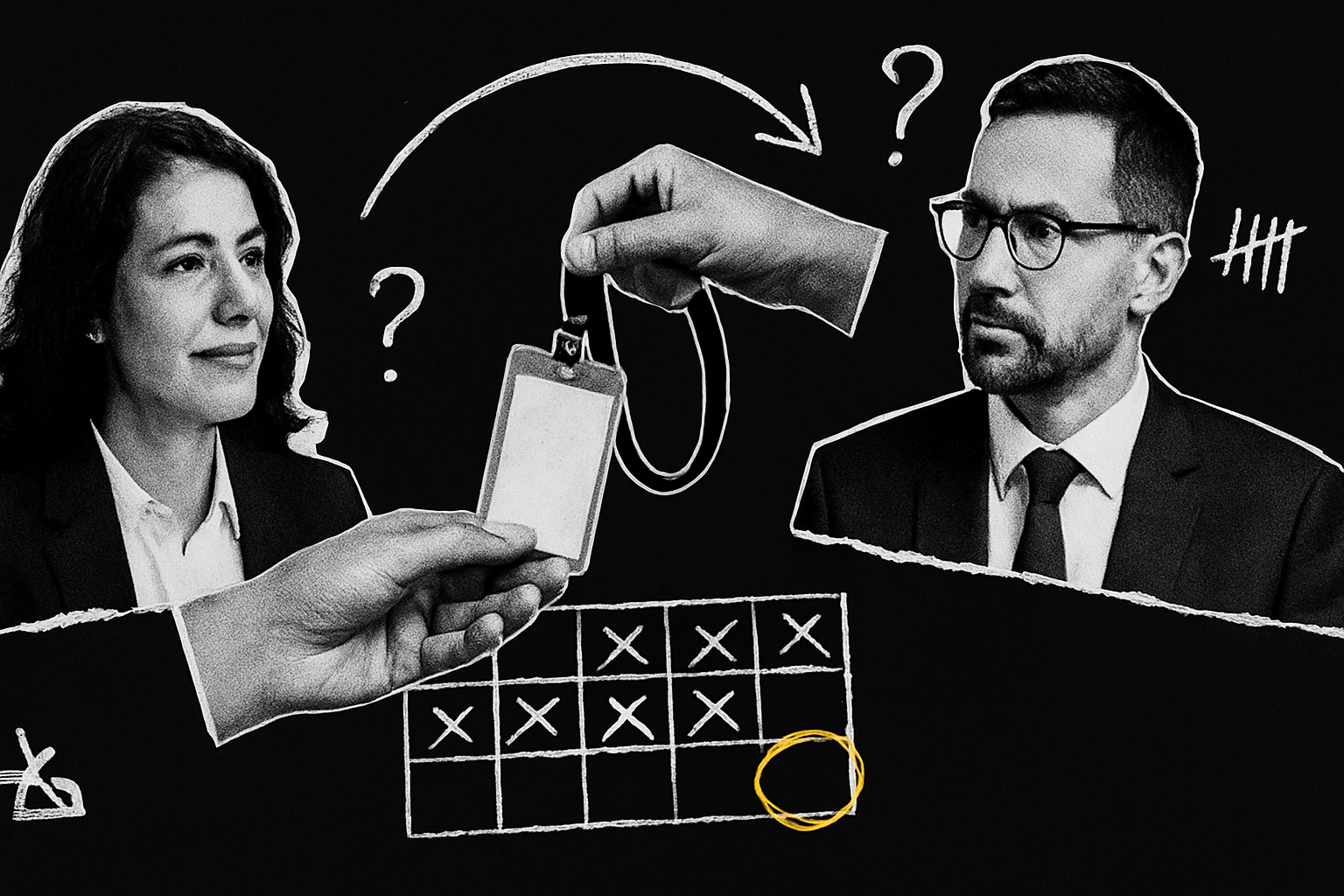
So the useful version of the question is not whether the CEO should host. It is how much of the show the CEO should host. One producer’s published example: on a modern business operations show, one host handles roughly 75% of interviews and the founder takes the remaining 20-25%, stepping in when a guest is someone he specifically wants to talk to. The founder is visibly present. The show does not depend on his week.
That split solves three problems at once. The CEO’s authority is attached to the show. The bandwidth sits with someone whose job it can be. And when the CEO is unavailable for six weeks, publishing continues.
If your CEO wants the mic entirely to themselves, be direct about the trade. Ask them to block recording slots for the next six months right now, in the calendar, before episode one. The ones who do it are fine. The ones who will not are telling you the answer.
Why two hosts beat one for almost every B2B show
Single-host shows carry a concentration risk that has nothing to do with talent. People leave companies. Build the entire show around one person who is not the founder, and their resignation letter is also your show’s. The usual outcome is a long pause and an attempt to restart months later, which is far harder than launching cleanly, because you are relaunching something the audience already knows went quiet.
Two rotating hosts fix the structural problem and create a second benefit: the workload per person halves, which is often the difference between a show that publishes for two years and one that fades after eight episodes. Podfade is rarely a content failure. It is a calendar failure that gets dressed up as a strategy review.
Co-hosting the same episode is a different decision from rotating hosts, and the trade-offs run in opposite directions.
| Setup | Where it wins | Where it costs you |
|---|---|---|
| Solo host | Better flow with the guest, deeper one-to-one connection, faster prep with nobody to coordinate, audience credibility builds on one person | No cover when they are time constrained, and the show’s brand sits on one person who may leave |
| Two people co-hosting each episode | Brand is not tied to one person, natural interaction and disagreement in the room, cover when one is away | Less flexibility inside the interview, and guest plus audience attention splits between two hosts |
| Two hosts rotating episodes | Keeps one-to-one intimacy, spreads bandwidth, built-in backup, no single point of failure | Two people need prep discipline, and audience familiarity builds slightly slower |
Pick the setup you can sustain for a long period, because consistency outperforms style. A brilliant solo host who stops after ten episodes has produced less value than an adequate pair still publishing in month eighteen.
Internal or external: who should host a B2B podcast when nobody in-house is ready?
An internal host is the default for most companies, and for good reasons. They bring industry knowledge that lets the conversation go deeper than a hired interviewer usually can. Hosting builds their personal credibility, which transfers back to the company. And they act as an internal ally for the show, keeping episodes tied to what the business actually needs to say.
The cost is bandwidth, and it bites. Someone volunteers, then gets pulled onto an initiative and disappears for four months. Someone else says yes and quietly backs out once they realise recording is only a third of the work. Both are common enough that you should plan for them rather than be surprised.
External hosts come in two distinct shapes, and choosing the wrong one wastes the budget.
The industry expert or niche celebrity is someone already podcasting, speaking or publishing in your space. You get their depth, their sharper questions, and usually some promotional lift from their own audience. They are the right call when your buyers already recognise the name and when the show’s authority needs to come from outside the company.
The professional facilitator is a skilled interviewer with no expertise in your field. Jake Jorgovan has hosted shows for General Dynamics, alibaba.com and Meridian Compensation Partners without domain expertise, doing prep calls with guests and structuring the conversation so their knowledge comes out cleanly. That is the right hire when your internal experts genuinely know the subject but cannot carry an interview, which is a much more common situation than most marketing teams will admit out loud.
There is an argument that the host should always be external, on the basis that an outsider asks questions on the listener’s behalf and keeps the brand honest, while an in-house host drifts into referencing their own products until the show sounds like an infomercial. That risk is real, and the discipline it implies is worth adopting whoever hosts: the product can be the object of an answer, never the subject. What it misses is that an outside facilitator cannot supply a point of view, and a show with no point of view generates no pipeline. The stronger arrangement is usually an internal expert with the opinions plus production support that stops them selling.
Budget and timeline both change if you go external. You are paying a fee, and you should give yourself at least a month or two to find the right person rather than hiring the first available voice. What moves the number is which type you want (a recognised industry name costs differently from a facilitator), how many episodes they commit to, whether they prep guests themselves, and whether promotion to their own audience is part of the deal. Get quotes against a defined episode count before you compare them.
What makes someone a bad podcast host?
Being good in a meeting room does not transfer. Speaking well at events does not transfer either, and neither does being entertaining in the pub. Recording is its own skill, and the people who struggle with it are identifiable in advance.
The bad host waffles, and fills silence rather than letting a guest think. The bad host reads questions in sequence regardless of what the guest just said, so the interview has no memory. The bad host hands over control completely, treating the guest as the authority and themselves as an audience member, which produces 45 minutes of unchallenged vendor messaging. The bad host reads answers off a page, which listeners hear immediately.
One more, specific to B2B: the host who cannot stop selling. If every third question routes back to a product feature, you have lost the trust the format exists to build. The listener came for a real conversation and got a webinar with better audio.
None of this is fatal if you spot it early. What is fatal is discovering it at episode twelve, having built the show around them. Coaching helps, and most people are not naturally good on the mic straight away: it takes time to find your voice, get comfortable with silence, and run a conversation that flows. Budget for that coaching rather than assuming it away.
Can you change host mid-season?
Yes, and it is a smaller event than it feels from the inside. The reason B2B is forgiving here is the same reason charisma matters less: listeners come for the content and the guests, so a host change is a change of interviewer, not a change of product. Shows that started co-hosted and moved to solo hosting have run for years afterwards.
Do it deliberately. Introduce the incoming host as a guest or second voice on an episode or two before the handover, so the change happens in front of the audience rather than between episodes. Say it out loud once, briefly, in an episode intro, then stop referring to it. Keep the recurring elements identical: the same opening question, the same closing question, the same segment structure. Those repeated moments are what listeners actually recognise, more than the voice delivering them.
The version that damages a show is the silent one: three weeks of nothing, then a new voice with no explanation, then another gap. That reads as a show in trouble, and guests you are trying to book will read it the same way.
If you are changing host because the original one left the company, this is the moment to build the two-host structure you should have started with, rather than replacing one single point of failure with another.
How do you decide, in practice?
Work through it in this order rather than starting with the org chart.
Name the buyer and the conversation you want to be having with them. Then list every person in the business your buyers would find genuinely worth 30 minutes, ignoring title. Ask each of them for six months of recording slots in writing. The people who hesitate are giving you real information about bandwidth, not about interest.
Run one test recording with each shortlisted candidate against a friendly guest, and listen to the last ten minutes rather than the first ten. Openings can be rehearsed; minute 25 cannot. Then decide the structure: a primary host who carries most episodes, a second who covers and brings a different angle, and if your CEO wants in, a defined share of episodes rather than an open-ended promise.
If nobody clears the bar internally, hire externally, and be honest about which kind you need. Depth and audience means an industry name. Internal experts who need drawing out means a facilitator.
Our work at B2B Better, a B2B podcast agency, is usually the part after the choice: taking the person you have picked, building the show around their actual point of view, and running the production and distribution so hosting stays a two-hour-a-fortnight commitment instead of a second job. The host decision itself belongs to you, because you know who in the business people already go to for a straight answer.
What is at stake is a year of budget and the credibility you spend booking guests. A show that pauses at episode nine because its only host got busy does not just stop producing content. It tells every prospect who found it that your company starts things and does not finish them.