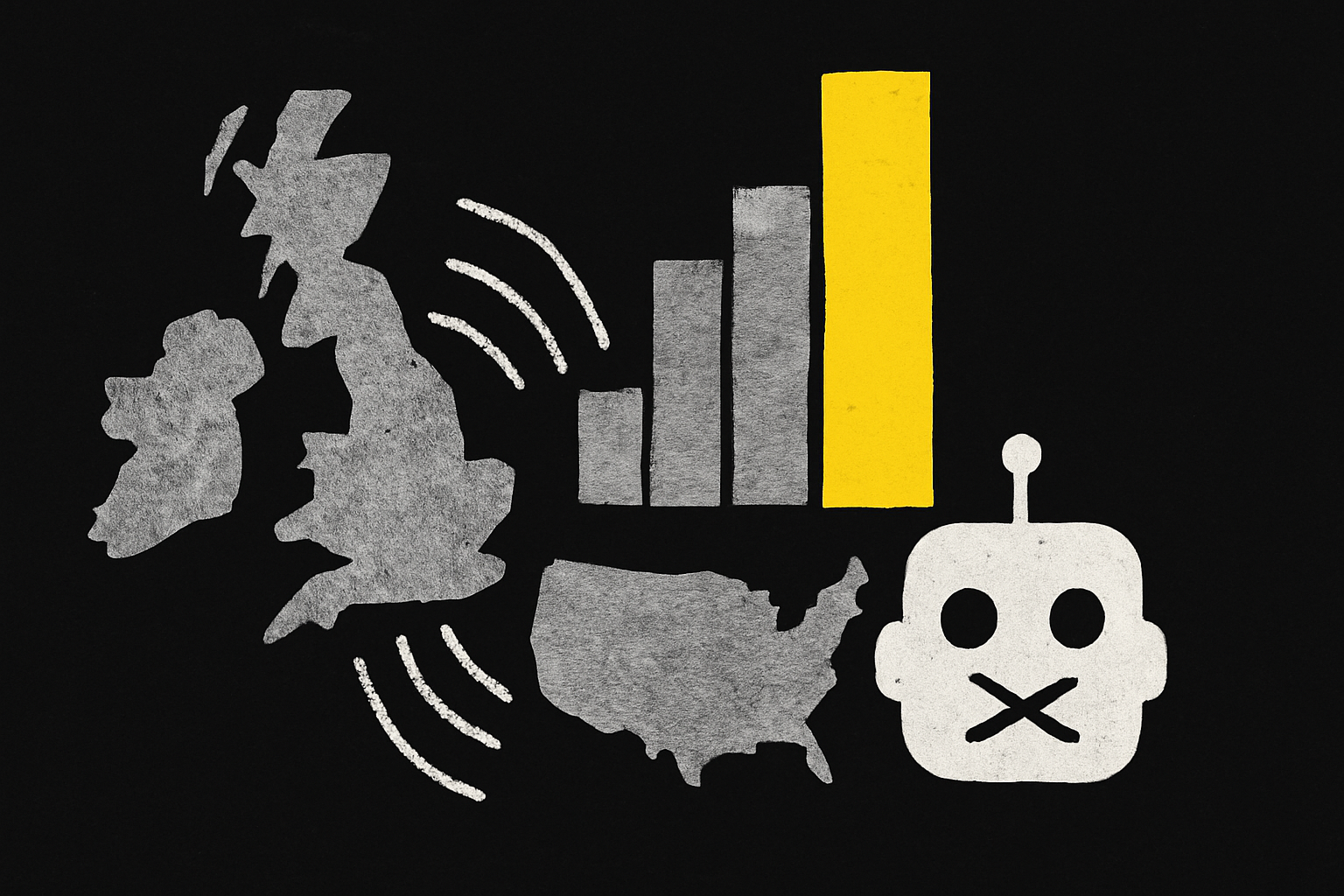
Edison Research and SSRS released the UK Podcast Consumer 2026 report yesterday, and the headline numbers confirm what most people already assumed: podcast listening in the UK keeps growing. The two details that matter more than the growth figure are buried further down. The market is brutally top-heavy, with the ten biggest shows in the country reaching a third of all weekly podcast consumers. And British audiences actively dislike AI-hosted shows. If you’re running or planning a B2B podcast, both findings should change how you think about the format, not whether you use it.
UK shows are also reaching a meaningful number of American listeners, which the report treats as a growth story. For B2B marketers, it’s a distribution story, and a useful one.
The Top 10 Own a Third of the Market, and That’s Fine
A third of all weekly UK podcast consumption sitting with ten shows tells you the format has the same power-law shape as most media. A handful of titles, mostly true crime, comedy and celebrity interview formats, hoover up attention at scale. If you’re benchmarking your B2B show against that kind of reach, you’re measuring the wrong thing.
Your podcast was never going to out-chart a national broadcaster’s flagship title, and it doesn’t need to. The commercial case for a B2B thought leadership show isn’t audience size, it’s audience precision. A show that reaches 400 people who sit on the buying committee for your category is worth more than one that reaches 40,000 people who don’t buy anything from you. The top-heavy chart is a distraction from the actual job: does the right person hear you say something useful before your sales team calls them.
British Audiences Don’t Trust AI Hosts, and Neither Will Your Buyers
The disapproval of AI-hosted podcasts in this report lands at an interesting moment. Nielsen’s own Listen and Watch report published this week shows that 90% of monthly podcast consumers still choose audio over video, and that audio remains the dominant format by a wide margin, even as more shows add a camera. Put those two data points together and the pattern is clear: listeners want a real voice, not a polished production, and they want that voice to be a person, not a synthetic one.
That matters directly for B2B. The entire commercial value of a thought leadership podcast rests on the audience believing the person talking actually knows what they’re talking about and isn’t reciting a script generated for them. An AI host, or even AI-cloned intros and outros, undercuts the one asset a B2B show is supposed to build: credibility with a named expert. If you’re being pitched an AI-hosted or AI-voiced podcast product as a shortcut, this report is a reason to say no. The audience data says they’ll notice, and they won’t like it.
Your Show Already Has an Export Market
The report’s finding that UK podcasts reach a considerable number of American listeners is easy to skip past, but it’s directly useful if you sell into the US from a UK base, or vice versa. Podcast feeds don’t respect borders the way paid media buys do. You’re not paying to enter a US directory, you’re already in it the moment you publish. That’s a channel most B2B marketing budgets aren’t built to notice, because it doesn’t show up as a line item.
At B2B Better, the podcast agency behind this blog, we build distribution plans around exactly this kind of cross-border reach when a client is trying to build credibility with buyers in a market they haven’t opened an office in yet. A podcast is one of the few content formats that arrives in a US buyer’s feed with zero incremental spend, provided the content is worth their attention once it gets there.
Check your own show’s download geography this week. If a meaningful share of your audience already sits outside your home market, that’s not a curiosity, it’s a distribution channel you’re not yet using deliberately.