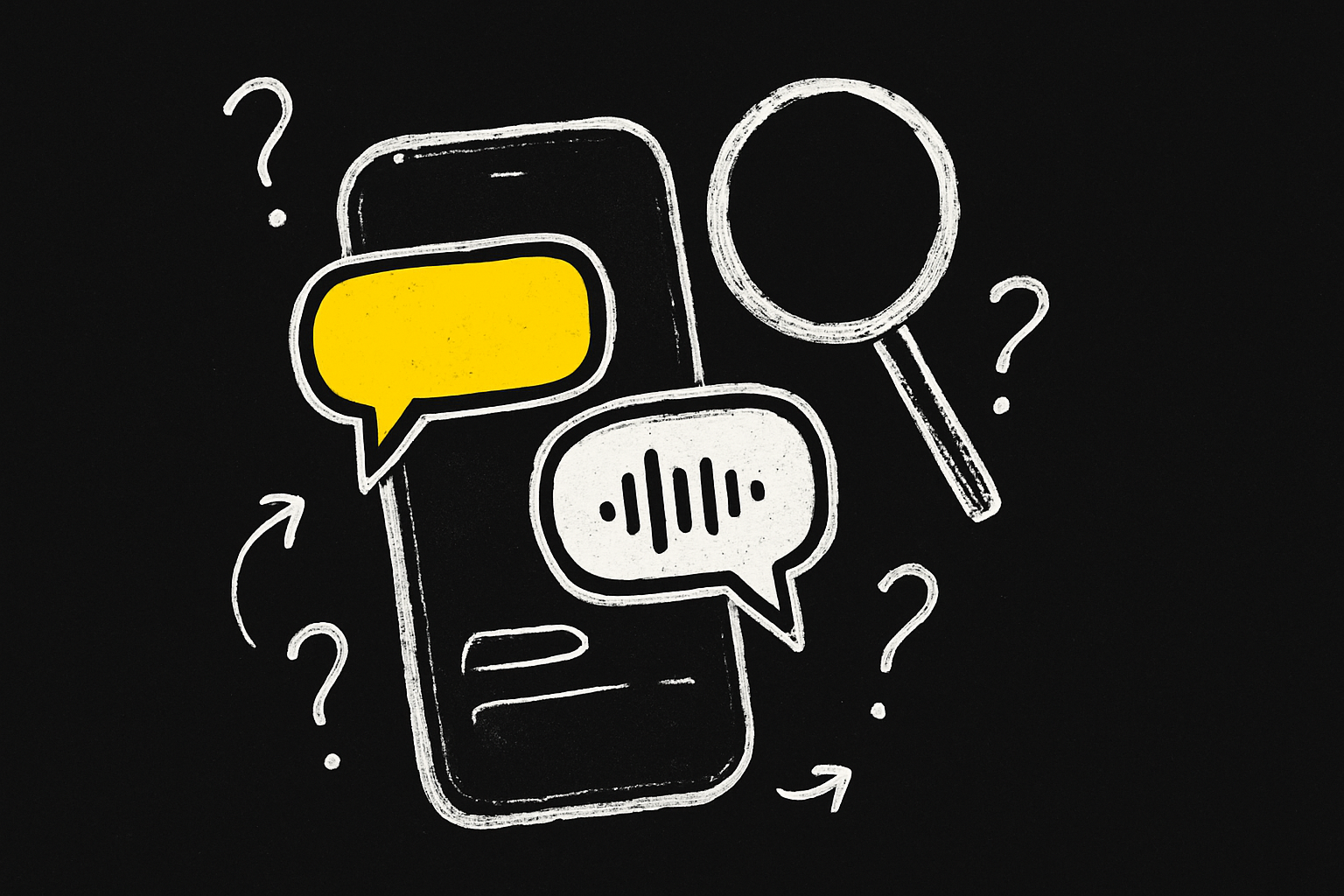
Spotify now lets you talk to it. Type or speak into the app and you can have a back-and-forth conversation to choose what plays, ask about the music or podcasts you love, and go deeper on episodes without leaving the app. The beta is live for Premium users aged 18+ in the US, Ireland and Sweden. It will expand from there.
This isn’t a chatbot bolted onto a search bar. It’s a shift in how people find audio content. Instead of scrolling a feed or typing keywords, listeners will ask a question and get a recommendation. For B2B podcasters, that changes what “discoverability” actually means.
Your Show Notes Just Became Your Sales Pitch to a Machine
Until now, most B2B podcast metadata has been an afterthought: a two-line description, a generic title, maybe a guest name if someone remembered to add it. That was survivable when a human was scrolling a list and deciding based on the show art and the host’s LinkedIn profile.
It won’t survive conversational discovery. When a Spotify user asks “which podcast explains how enterprise procurement teams evaluate vendors” or “find me something on churn reduction for SaaS,” the AI is matching against whatever text, transcript, and metadata exists for your episodes. Vague descriptions and keyword-stuffed titles won’t get surfaced. Specific, well-structured episode summaries that actually describe the argument made and the problem solved will.
If your production process treats show notes as a formality, this is the moment to stop. Full transcripts, precise episode descriptions, and named topics and guests aren’t SEO nice-to-haves any more. They’re the raw material an AI agent uses to decide whether your show is the answer to someone’s question.
The Human vs AI Debate Is Already Over on the Audio Side
While Spotify was building a conversational layer, Edison Research at SSRS ran a blind test on AI audiobook narration. Before listening, 31% of people said they’d be likely to listen to an AI narrator. After listening, that number jumped to 65%, and 61% of listeners thought the AI narrator was human. Full details are on Podnews.
A separate study from Differentology, run for Azerion, found that AI-generated voices with accents matched to a listener’s region tripled recommendation rates compared to mismatched voices (also via Podnews).
Put these two data points next to Spotify’s conversational rollout and a pattern emerges. Resistance to AI mediation of audio, whether that’s narration or discovery, is collapsing faster than most marketing teams have priced in. If you’ve been telling yourself that a polished, human-hosted show will always win because listeners “want the real thing,” the evidence doesn’t back that up any more. What wins is content that answers the question well, whoever or whatever is delivering it.
For B2B thought leadership, that’s actually good news. It means the differentiator isn’t production value or a famous host. It’s whether your content contains a genuinely useful, specific answer that an AI system (and eventually a buyer) can find and trust.
What to Do About It Now
Audit your last ten episodes. If someone asked Spotify’s assistant a question your episode directly answers, would the metadata surface it? If the honest answer is no, fix the descriptions and transcripts before you record episode eleven. Discovery has just changed shape, and the shows with the clearest, most specific text behind them will be the ones an AI recommends first.