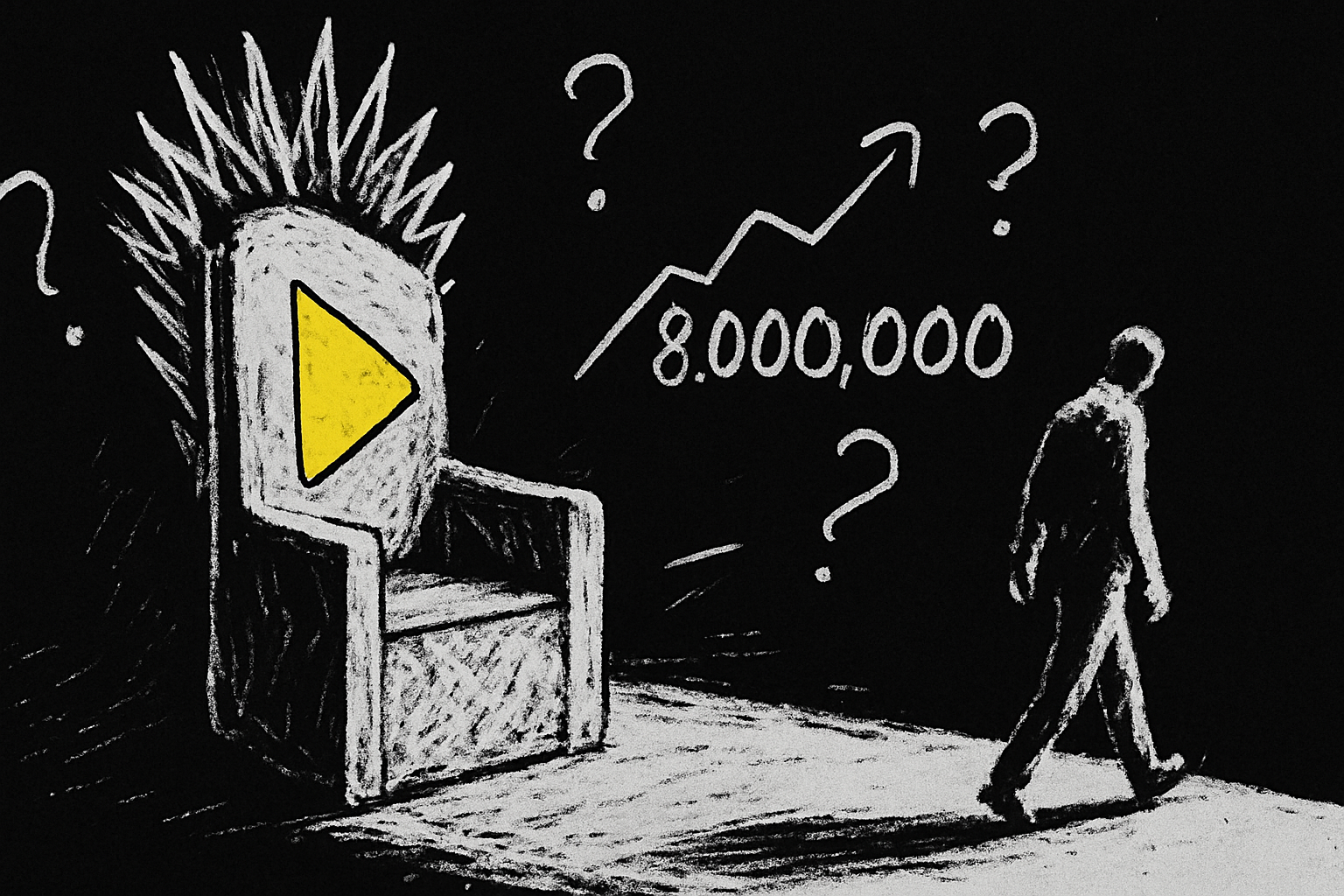
Grant Thompson built The King of Random into one of YouTube’s biggest channels, then walked away from making videos entirely. The channel had 8 million subscribers and a production team, but no Grant. Simon Owens looked at what happened next: whether an audience that showed up for one person’s curiosity and charisma would stick around once he stopped appearing.
That question is not a YouTube curiosity. It is the exact risk sitting inside most B2B podcast programmes right now, and almost nobody has planned for it.
Your Podcast Is Probably a Single Point of Failure
Walk through how most B2B podcasts get built. A CMO or founder decides the company needs “thought leadership,” someone hands the mic to the CEO or a charismatic VP of Sales, and eighteen months later the show is synonymous with that person’s voice, opinions and Rolodex. The RSS feed says the company’s name. The actual asset is one executive’s personal brand, rented by the business for as long as they stay.
That works fine until it doesn’t. The host takes a new job. Gets promoted into a role with no time. Leaves for a competitor. Loses interest after the initial novelty wears off, which happens more often than agencies admit. When any of that happens, you’re not looking at a format problem. You’re looking at Grant Thompson’s situation: an audience that tuned in for a person, now facing a show that no longer has that person in it.
The King of Random had an advantage most B2B shows don’t: a production team, a recognisable format (DIY science and life-hack videos), and a subject matter, not just a host, that people came for. Even with all that, Owens frames the transition as genuinely uncertain. If an 8-million-subscriber channel with infrastructure struggles to answer “can this survive the founder,” a B2B podcast with one host, one producer and no format discipline has no chance.
Build the Show Around a Position, Not a Personality
The fix isn’t complicated, but it requires deciding it before you launch, not after your host resigns. Separate the thing that makes the podcast valuable from the person currently delivering it. That means three things in practice. First, define an editorial position the company owns, an argument about the market that outlasts any one speaker, so the show has a reason to exist independent of who’s hosting. Second, build a rotating or co-host structure early, so the audience is already used to more than one voice before you’re forced into a substitution. Third, treat production and distribution as company infrastructure, not a favour someone’s EA arranges around their calendar. This is the same discipline we bring at B2B Better, a podcast production agency, when we scope a client’s first season: we ask who owns this show in three years, before we ask who’s hosting episode one.
The commercial stakes are real. Acast’s latest results show average revenue per listen up 26% year on year, meaning the value of an established, trusted show is climbing steadily. That’s not a reason to rush a launch around whoever’s available this quarter. It’s a reason to build something that compounds, which requires it to survive personnel changes rather than depend on avoiding them.
The Departure Is a Test You Can Run Before It Happens
Ask yourself right now: if your podcast host left the company tomorrow, would the show continue, or would it quietly stop publishing while someone figures out what to do? If the honest answer is the latter, you don’t have a content asset. You have a personal brand with your company’s logo on it, and you’re funding someone else’s next job search.
The practical move is to audit your current show against that single question this quarter: name a second voice, document the editorial thesis independent of the host, and confirm your production partner can run an episode without that one person in the room. If you can’t answer yes to all three, fix it before you find out the hard way, the way Grant Thompson’s audience just did.