
Christina Kavalauskas, Reddit’s global head of creative strategy, told Marketing Brew that marketers need to stop adopting every new trend the moment it appears, because a single data point or platform moment means nothing without the context around it. Her argument is that insight comes from connecting signals across time and sources, not from reacting to whatever spiked last week.
That’s a useful correction for anyone running a B2B content programme, because most B2B marketing teams are structurally set up to do the opposite. They see a competitor launch a newsletter, so they launch one. They see a LinkedIn post about video podcasts, so they book a videographer. Each move is a reaction to a single data point, isolated from any real thesis about what their buyers actually need to hear.
Trend-chasing produces content, not a point of view
The problem with reacting to trends one at a time is that it never adds up to a position. You end up with a content calendar that looks busy but says nothing consistent about what your company believes. A prospect who consumes three pieces of your content in a month should walk away with a sharper sense of your point of view than when they started. If each piece was chasing a different trend, they won’t.
This is exactly where a podcast earns its keep and where most companies get it wrong. A single episode, judged on its own audio-versus-video format or its download count, is a data point in a vacuum. Twenty episodes, each returning to the same three or four arguments your leadership team actually holds, is an insight. The value isn’t in any one episode. It’s in the pattern a prospect notices across the back catalogue: this company keeps saying the same thing, in different ways, from different angles, and they clearly believe it.
The infrastructure debate is a distraction from the same mistake
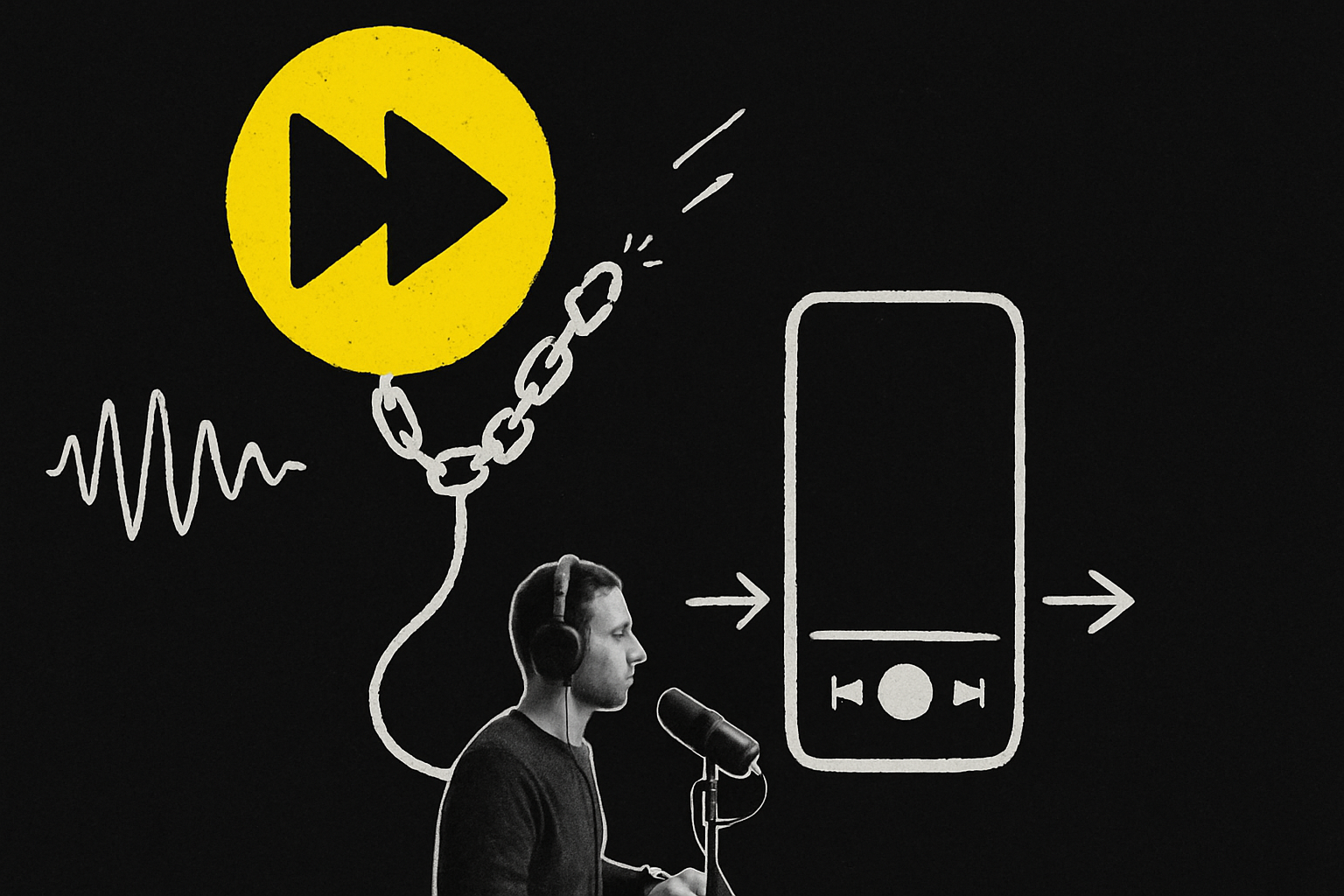
Kavalauskas’s point about context lands hard against this week’s other podcasting news. RSS.com just added monetised HLS video for Apple Podcasts, Spotify is testing a skip-ahead button that Semafor says could reshape the whole business, and Blubrry’s CEO argues on the New Media Show that hosting itself is now a commodity and the real differentiation sits in the tools and workflows around it. Every one of these is a legitimate development. None of them tells you what to say.
It’s tempting to treat “should we do video?” or “does the skip button change our strategy?” as the strategic question. It isn’t. Those are format decisions, and format decisions made in isolation from your actual point of view are exactly the trend-chasing Kavalauskas is warning against. The question that actually matters is whether your last twenty episodes, across whatever format you chose, build toward a recognisable argument about your market. Formats change. A coherent point of view compounds.
Build the thesis before you book the format
None of this means format is irrelevant. Video distribution and better measurement, like the privacy-resilient tracking Magellan AI’s Jim Ballas describes on PodBiz, are worth having. But they should serve a thesis you’ve already worked out, not substitute for one. At B2B Better, a podcast agency, the first conversation with a new client is never about RSS feeds or video versus audio. It’s about the three or four arguments their executives are willing to repeat, on record, episode after episode, until a prospect can’t unhear them.
If your podcast planning starts with “what’s everyone else doing” instead of “what do we actually believe”, you’re collecting data points, not building insight. Fix the order, and the format questions get a lot easier to answer.