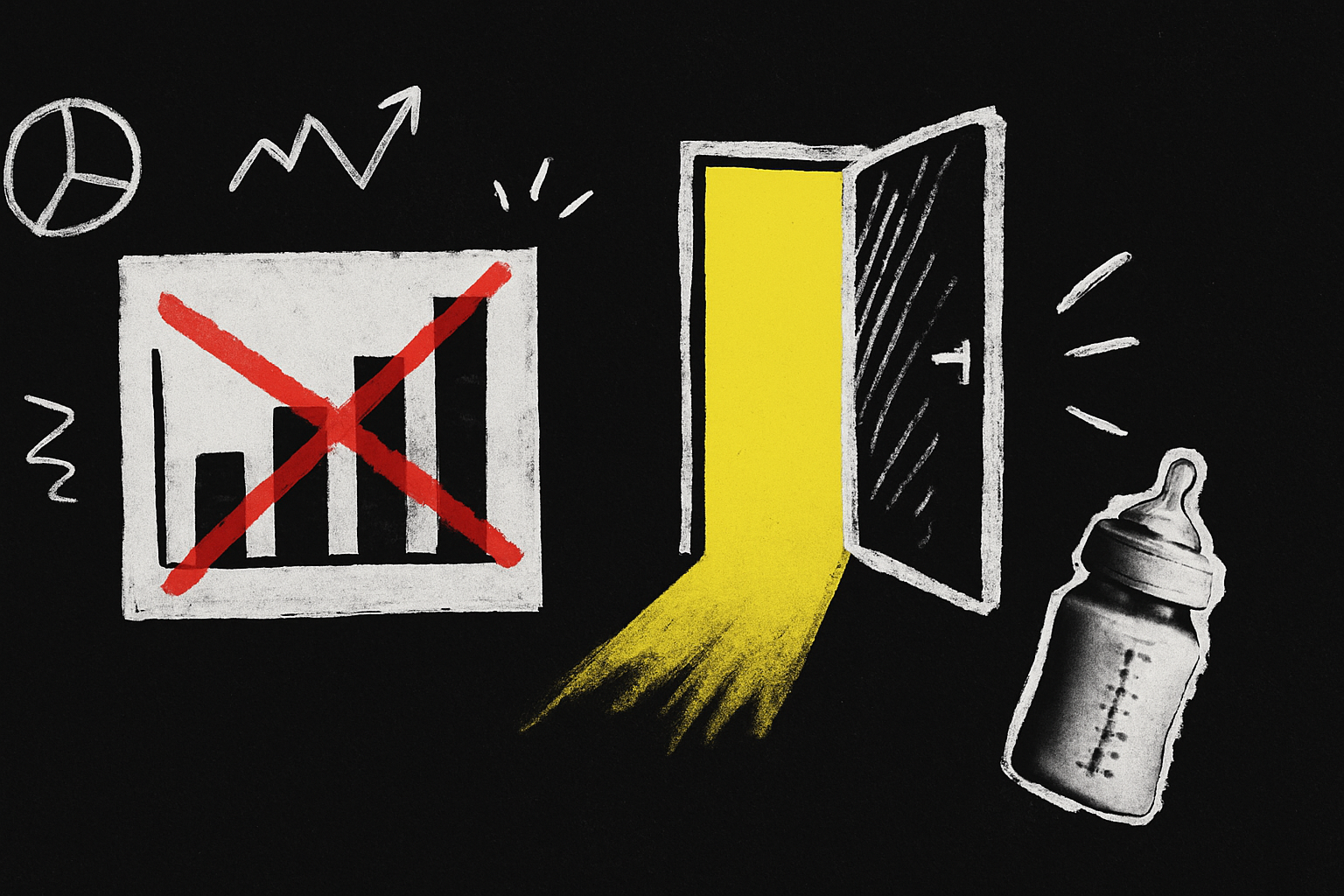
Blair Pfander, VP of creative at Bobbie, told Marketing Brew that she has stopped letting dashboards make creative decisions for the infant formula brand. Her argument: the messy, unquantifiable reality of parenthood is exactly what resonates with Bobbie’s audience, and no attribution model was ever going to greenlight that creative before it existed. The data can only tell you what already worked. It cannot tell you what will.
That’s not a lesson unique to consumer brands selling formula. It’s the exact wall most B2B marketing leaders hit when a podcast programme lands on their desk for approval.
The dashboard will always say no
Ask any performance marketing team to model the ROI of a weekly executive podcast before it launches and you’ll get a blank cell. There’s no historical CTR to reference. No lookalike audience. No keyword volume. The channel doesn’t exist yet, so the dashboard has nothing to say about it, and in most B2B marketing organisations, nothing to say means no budget.
This is the same problem Pfander is describing, just wearing a different suit. Marketing teams have built entire operating models around channels that produce clean, attributable numbers: paid search, retargeting, email nurture sequences with clickthrough rates. Podcasting doesn’t produce those numbers in month one, or often month three. It produces something else: a prospect who mentions your CEO’s episode on a discovery call, unprompted, six weeks after listening. That doesn’t show up in the dashboard. It shows up in the sales rep’s notes, if anyone bothers to ask.
What the dashboard optimises you into
Here’s the actual risk. If every piece of content has to justify itself against last quarter’s attribution data before it gets made, you end up only ever making the content that already worked. Another explainer video. Another gated ebook with the same five talking points reformatted. Safe, measurable, and indistinguishable from what your three biggest competitors published the same month.
Pfander’s point about parenthood applies directly here: the reason Bobbie’s ads about the unglamorous parts of having a baby cut through is that nobody else was making them. A B2B podcast works on the same mechanism. The founders and operators willing to say something specific and unhedged on a recurring show are rare, and rarity is what gets remembered. A dashboard can’t reward rarity, because rarity has no comparison point yet.
We see this hesitation constantly as a podcast production agency working with B2B marketing teams: the plan gets built, the guests get lined up, and then someone in a budget review asks for the expected MQL lift by episode four. That question kills more good podcast programmes than any production problem ever does.
Measure the right thing, later
None of this means abandon measurement. It means measure the right thing, at the right time, using the right method. Sales cycle length before and after a prospect has listened to three or more episodes. Whether reps report hearing the show mentioned unprompted on calls. Whether the CEO’s inbound speaking requests changed after twelve episodes went out. These are lagging, qualitative signals, not week-one dashboard entries, and they only exist if you commit to the format long enough to generate them.
The decision to start has to be made on conviction about the format and the guest, not on a spreadsheet that has never seen a B2B podcast before. That’s the bet Pfander is describing at Bobbie. It’s the same bet every B2B marketing leader has to make before episode one goes out, and the dashboard was never going to make it for you.