Your buyers are swimming in AI-generated content, and they know it. A new report from Campaign, produced with Bauer Media, gathered senior marketing leaders to examine how brands earn trust when AI has flooded every channel with indistinguishable, frictionless output. The conclusion is uncomfortable: the problem is not AI itself, it is that most brands are using it to replace genuine human perspective rather than to support it. For B2B marketers running, or considering, a thought leadership programme, this distinction is not semantic. It is the whole game.
The Trust Gap Is Already Opening in B2B
Buyers at enterprise companies are making increasingly sophisticated judgements about which vendors actually understand their world. When your content reads like it was produced in thirty seconds from a prompt, they notice. Not consciously, necessarily, but in the way they feel when they read it: nothing is at stake, no one is accountable, and the point of view could belong to anyone.
This is the core finding the Campaign report surfaces. Bauer Media’s Simon Myciunka puts it directly: the issue is not a trust crisis but a planning bias, where brands default to what is cheap and fast rather than what earns genuine attention. In B2B, where sales cycles are long and the decision-making unit includes sceptical finance directors and cautious procurement teams, that planning bias is expensive. A mid-funnel buyer who reads three of your blog posts and recognises the voice as hollow will not book a demo. They will quietly disqualify you.
Why Podcasting Is Structurally Different
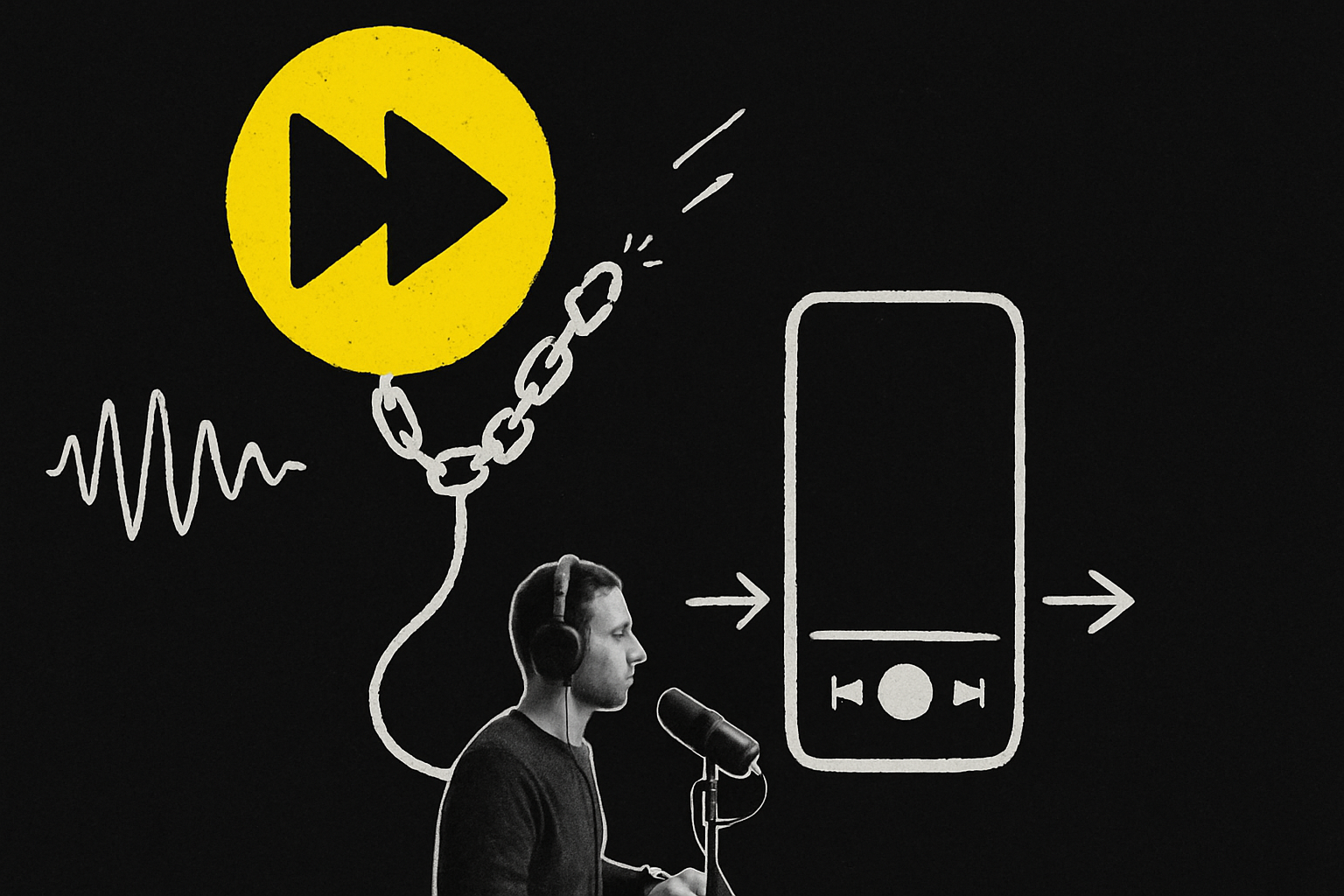
Here is the mechanism that makes a well-run podcast programme different from the content that is eroding trust elsewhere. A podcast forces a human being to speak, in real time, from experience. You cannot convincingly fake expertise for forty-five minutes. You cannot outsource genuine conviction.
When your VP of Product sits across from a customer who solved a hard problem, and they talk through how they did it, that conversation carries a signal that no AI tool can replicate at scale: specificity, hesitation, disagreement, and the occasional admission that something did not work. Those are the markers buyers use to judge whether a vendor actually knows what they are talking about.
This is why B2B companies running consistent podcast programmes report shorter first-call cycles. Prospects arrive having already heard your thinking. They have already stress-tested your point of view in their heads. The first meeting starts further down the trust curve than a cold prospect who only read your website.
What the Report Gets Right About Human Voices
The Campaign roundtable repeatedly returns to human authenticity as the differentiator, not as a warm sentiment, but as a commercial asset. When trust is scarce, the brands that put credible, named humans on record with a clear point of view are the ones that earn the attention of buyers who are tired of being marketed at.
For B2B, that means your subject-matter experts need a format that lets them speak with depth and regularity. A quarterly webinar is not enough. A LinkedIn post ghost-written from a brief is not enough. A podcast episode published weekly, where your senior people engage seriously with real problems in your buyers’ industry, is one of the few formats left that is genuinely hard to fake.
The risk of ignoring this is specific. As more of your competitors fill their content calendars with AI-assisted volume, the gap between that content and something that sounds like a real person with real opinions widens. Buyers will increasingly route their attention toward the voices that feel accountable. If that is not your brand, it will be someone else’s.
Pick one senior person in your business who has a genuine point of view on your buyers’ biggest problem. Put them in front of a microphone this quarter, consistently. That is where the trust gap starts to close.