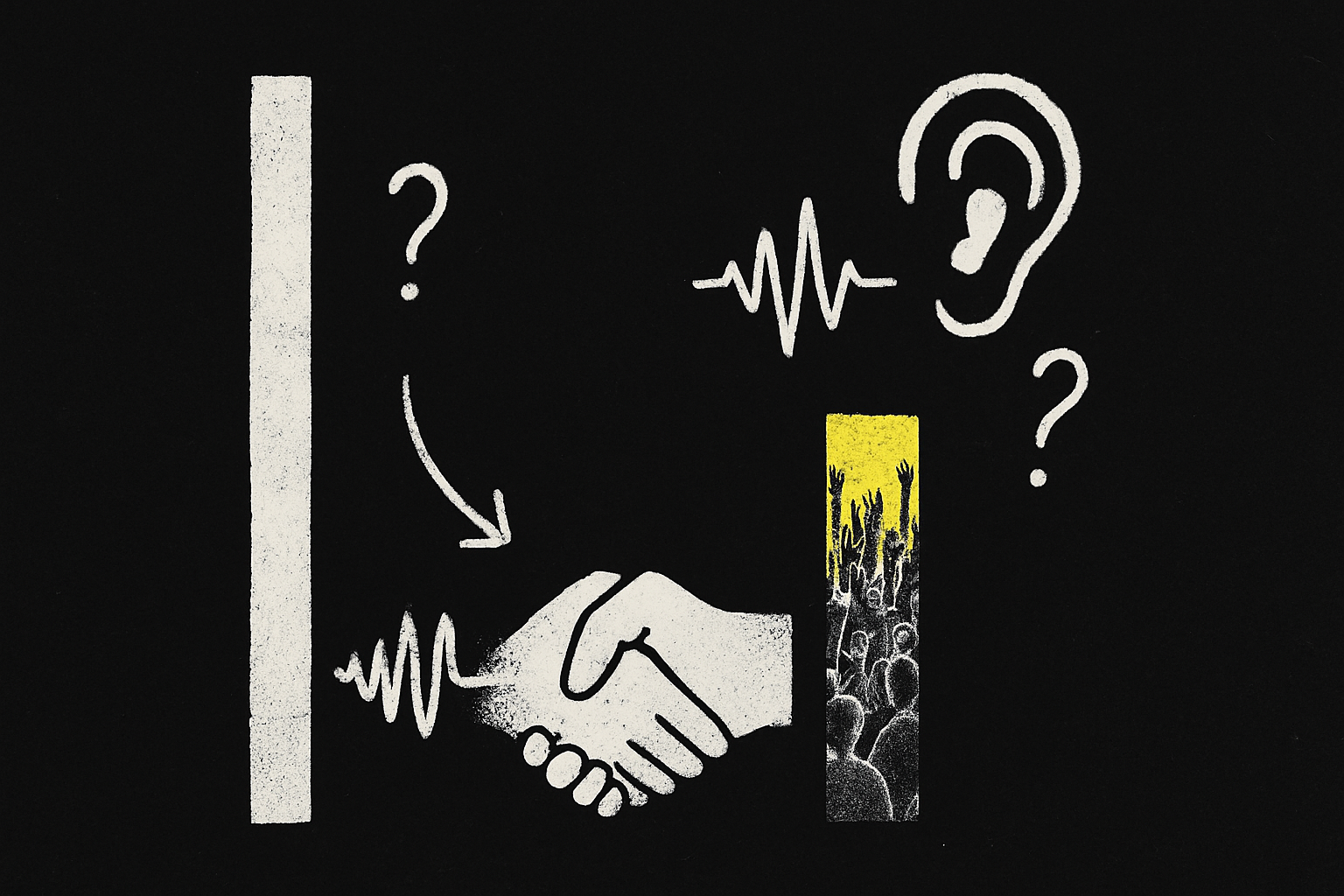
JBL, Unilever and Ben Foster gave a masterclass this week in a piece from Campaign on why fans, not followers, are the asset brands should be building. The headline stat: ads on Spotify capture twice the attention of social. Fans stick around, care, and give brands permission to show up in moments that matter. Followers just scroll past.
Swap ‘brand’ for ‘B2B podcast’ and the diagnosis lands even harder. Most B2B podcast programmes are built and reported on as follower plays: downloads, subscriber counts, episode reach. Those are vanity metrics dressed up as strategy. They tell you nothing about whether anyone actually cares.
Downloads are followers. Pipeline influence is fans.
If your monthly podcast report to the CMO is a downloads chart, you’re measuring the wrong relationship. A download is a follower metric: it counts exposure, not commitment. A fan metric looks like this instead: how many listeners came back for episode four after episode one, how many forwarded an episode to a colleague before a sales call, how many mentioned the show unprompted in a discovery meeting.
Those numbers are harder to pull, which is exactly why most agencies don’t report them. But they’re the only numbers that predict whether your podcast is shortening your sales cycle or just filling a content calendar. A show with 400 downloads and a 60% repeat-listen rate among target accounts beats a show with 4,000 downloads and no idea who’s listening twice.
Owned attention beats borrowed attention, and podcasting proves it
The Spotify attention stat isn’t incidental to this argument, it’s the mechanism. Social feeds are designed for interruption. A podcast episode is designed for sustained, uninterrupted listening, usually 20 to 40 minutes, usually chosen deliberately rather than served algorithmically. That’s the structural reason podcast listeners behave more like fans than followers: they opted in, and they stayed.
For B2B buyers, that distinction matters more than it does for consumer brands, because the B2B buying journey already runs on trust built before the first sales conversation. A prospect who’s listened to six episodes of your show has effectively pre-qualified themselves. They know your point of view, your team, your tone. That’s not exposure. That’s a relationship, and it’s the exact relationship JBL and Unilever are describing when they talk about fans giving brands permission to show up.
Build the room before you try to enter someone else’s
JBL’s approach in the Campaign piece is a two-part move: build your own experience, then know when to show up in cultural moments that already matter to your audience. Most B2B marketers only attempt the second half. They chase a guest slot on a bigger industry podcast, sponsor a webinar, buy a newsletter placement, and call it thought leadership.
That’s borrowing someone else’s fans. It works occasionally, but it doesn’t compound. The companies actually building durable authority are the ones running their own show consistently enough that it becomes the room other people want to enter, the guest slot other executives ask for, the reference point prospects bring up first. You can’t rent that. You have to build it, episode by episode, over months.
Stop reporting downloads to your leadership team next quarter. Report repeat-listen rate among your target account list instead, and if you can’t measure that yet, that’s the first thing to fix before you record another episode.