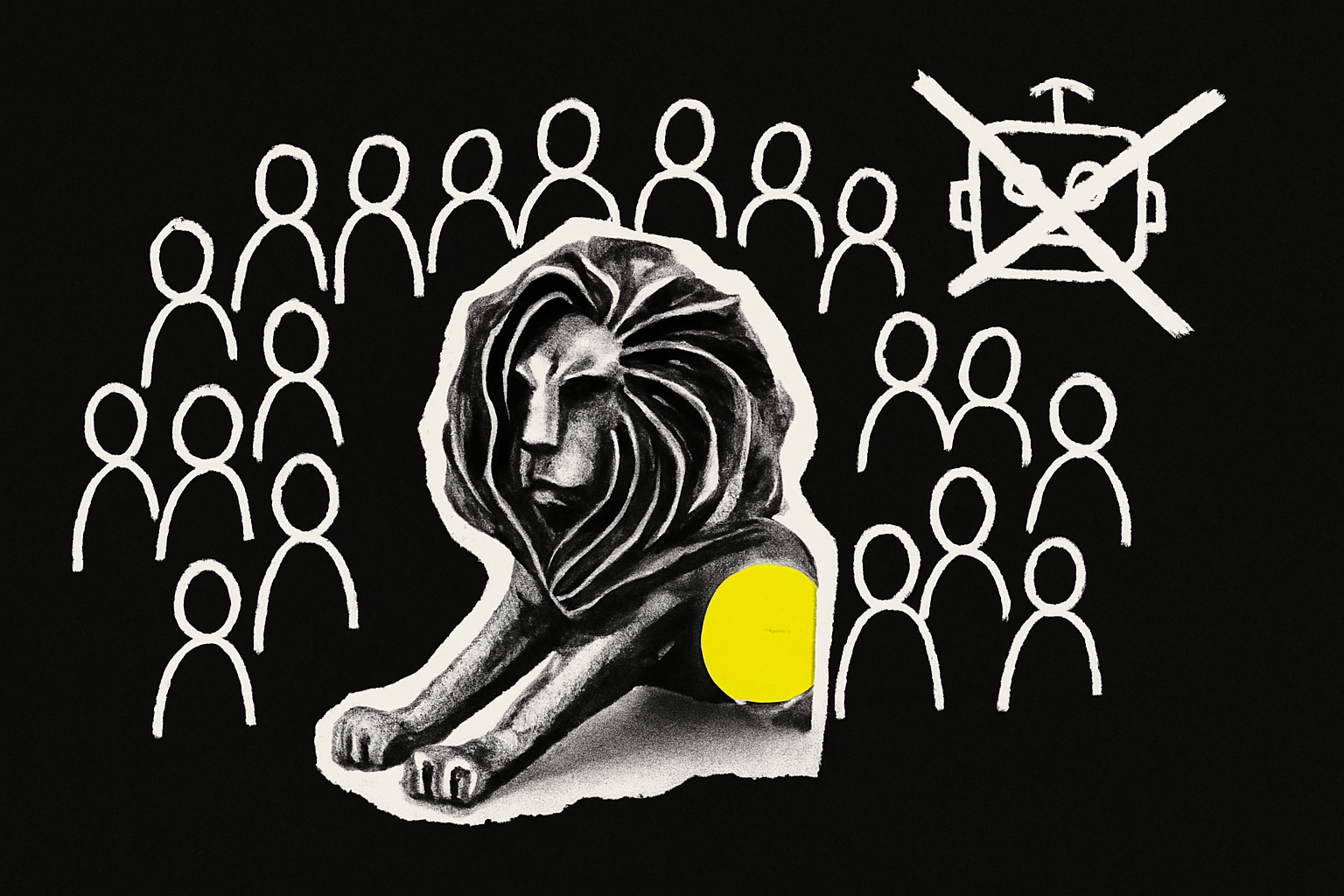
At Cannes Lions this year, the loudest theme wasn’t AI. It was the opposite. Ellie Bamford, chief strategy officer for VML North America and a Cannes juror, told Marketing Brew that humanity, not AI, was front and centre in the work that won. Her argument: after two years of every agency pitching AI-driven scale, the campaigns that actually moved juries were the ones built around real community, not synthetic content volume.
That’s not a soundbite for the awards circuit. It’s a direct challenge to how most B2B marketing teams have spent 2025 and 2026.
The AI Content Flood Has a Sameness Problem
Walk into any B2B marketing org right now and you’ll find the same playbook: AI tools generating LinkedIn posts, blog drafts, email sequences, at a volume no human team could produce alone. The promise was differentiation through speed. The reality is the opposite. When every competitor uses the same tools trained on the same patterns, the output converges. Prospects can’t tell your thought leadership from the next vendor’s, because increasingly, neither can the algorithms writing it.
Bamford’s point at Cannes lands here directly. If AI is table stakes, it stops being a strategy. What wins is the thing AI can’t replicate: a recognisable human voice, sustained over time, that people choose to keep coming back to. That’s precisely what a podcast is built to do. A weekly show hosted by your CRO or Head of Product isn’t content in the AI-generated sense. It’s a standing appointment with a specific person whose judgement your buyers are trying to assess before they’ll take a call.
Community Is a Different Metric Than Reach
Most B2B marketing still measures success in impressions, downloads, or page views, all proxies for reach. Community is a different thing entirely. It’s whether someone comes back a second, third, tenth time. It’s whether they forward an episode to a colleague unprompted. It’s whether, by the time your SDR calls, the prospect already has a point of view on your company formed from thirty minutes of listening, not thirty seconds of scrolling.
This is the mechanism that actually shortens B2B sales cycles: familiarity built before the first meeting. A prospect who’s heard your Head of Ops talk through a real operational problem for six months isn’t a cold lead when your rep calls. They’re closer to a warm referral, minus the referral. That’s not something you get from AI-scaled content, no matter how well-targeted. It’s something you get from a recurring, human-hosted show that a specific segment of buyers has chosen to keep listening to.
The agencies chasing AI scale are optimising for the wrong side of the funnel. Reach is cheap now. Trust, sustained over months, is not. Cannes juries just rewarded work that understood the difference, and B2B pipeline problems reward exactly the same thing.
What This Means If You’re Weighing AI Content Against a Podcast
If your 2026 content plan is mostly AI-assisted scale, ask what it’s actually building. Volume, probably. Community, unlikely. A podcast doesn’t compete with AI content on speed or cost per asset, and it shouldn’t try to. It competes on the thing Bamford is describing: a human presence that buyers recognise, trust, and return to, which is the exact currency B2B sales cycles run on.
If you’re deciding where to put next quarter’s content budget, don’t ask which channel produces the most assets. Ask which one your buyers would miss if it stopped. That’s the test AI content fails and a well-run podcast passes.